New Guide to Creating Educational Escape Rooms
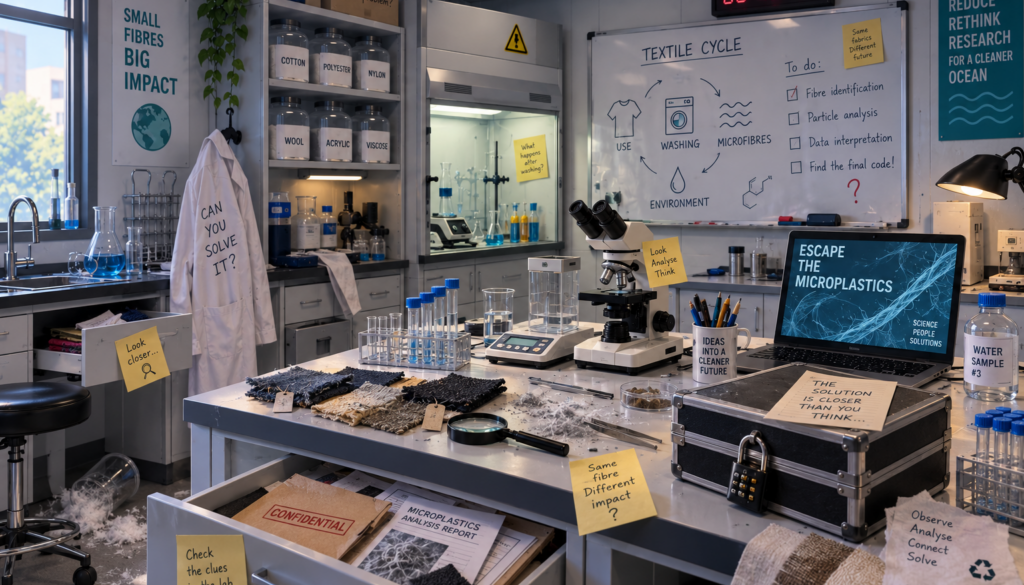
The MicroWeave-TEX project provides teachers and education professionals with a new, structured guide for designing and implementing Educational Escape Rooms. This resource was developed to facilitate the teaching of complex content related to sustainability in the textile sector and the release of microplastics and synthetic microfibers.
The guide presents a practical methodology that transforms technical and scientific knowledge into interactive challenges that are contextualized and tailored to students’ needs. Its goal is to help teachers create learning experiences that foster active participation, teamwork, critical thinking, decision-making, and problem-solving.
The document guides teachers through the entire process of creating the Escape Room: from defining learning objectives and developing an immersive narrative to selecting challenges, organizing teams, managing time, and incorporating digital tools. It also addresses the different types of structures the game can take, the roles of teachers and students, and the importance of conducting a final reflection or debriefing to consolidate the knowledge gained. In addition, the guide includes tools for assessing both teamwork and individual participation.
Although it was developed with a focus on textile sustainability and the issue of microplastics, its structure can be adapted to other disciplines, educational levels, and learning contexts. No prior experience with gamification is necessary, as the document provides guidance, examples, and resources to facilitate its gradual implementation.
The guide for developing Educational Escape Rooms is now available on the MicroWeave-TEX website, in the Educator’s Hub.